
Airflow Systems Built for Continuous Operation
Commercial Exhaust Systems in Florence for facilities where poor ventilation causes heat buildup, odor retention, or contaminated air circulation
Inadequate ventilation in commercial spaces causes heat to accumulate near ceilings, odors to linger in production areas, and airborne contaminants to recirculate instead of being expelled. DLM Enterprises installs and repairs commercial exhaust systems in Florence for warehouses, manufacturing facilities, and commercial kitchens where airflow improvements directly affect working conditions and code compliance. Exhaust systems fail when fan motors burn out from continuous operation, ductwork develops leaks at seam joints, or static pressure increases beyond what the fan was designed to overcome.
The work involves installing exhaust fans sized to building volume and contamination load, running ductwork with minimal bends to reduce resistance, and upgrading existing systems that no longer move sufficient air volume. Ventilation requirements differ based on what is being exhausted—heat alone requires different airflow calculations than fumes, dust, or steam.
Arrange a site visit to measure current airflow performance and identify duct routing options for new or upgraded exhaust capacity.
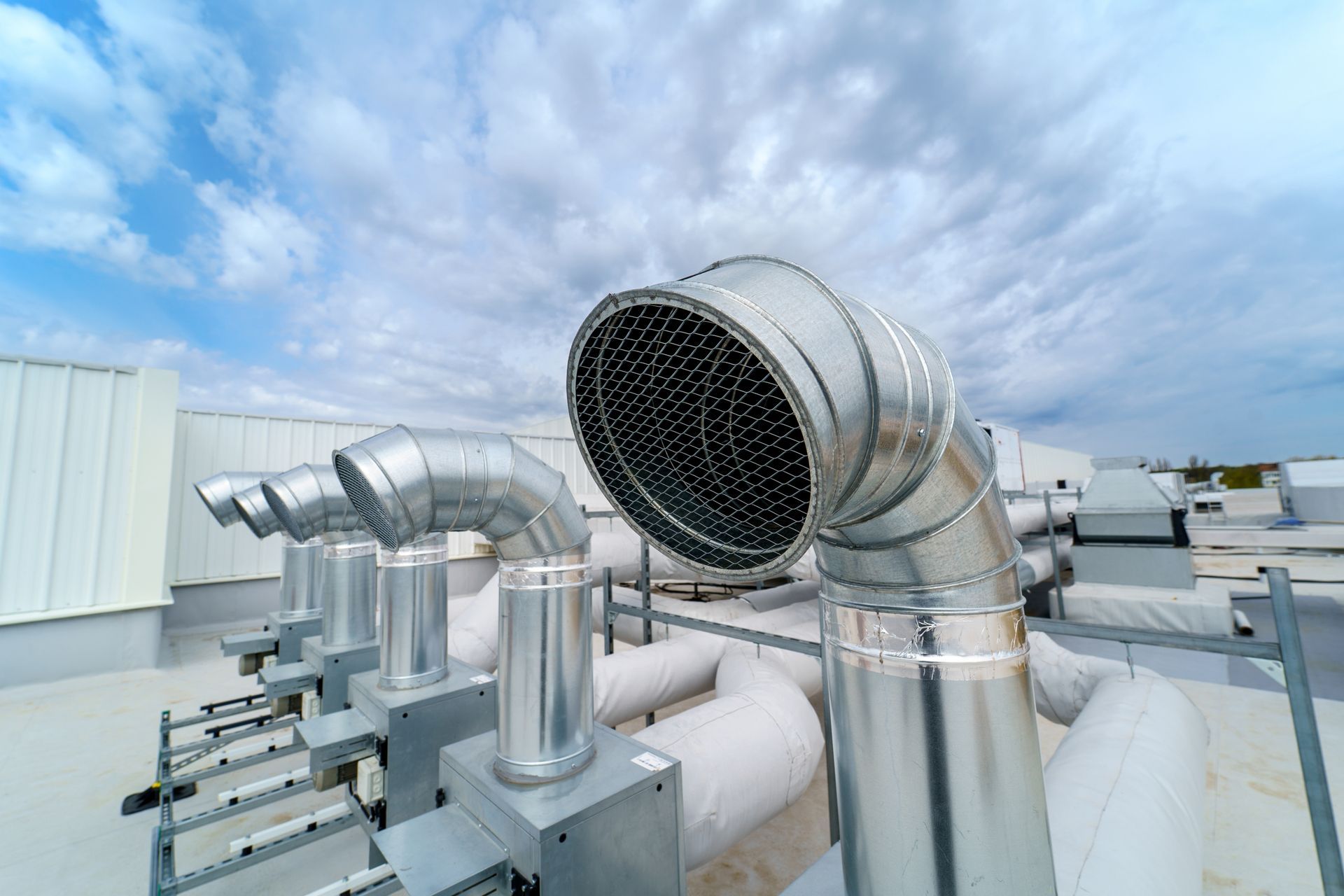
How Exhaust Systems Address Poor Air Quality
Exhaust system design starts with calculating air changes per hour needed for the space, then selecting fans with enough static pressure capacity to pull air through ductwork and exhaust it outside without backflow. Duct diameter, length, and number of elbows all increase resistance, so fan selection must account for total system pressure drop, not just the volume of air being moved.
Once the system is operating correctly, heat no longer builds up in work areas during shifts, odors clear within minutes instead of lingering for hours, and condensation stops forming on walls or ceilings where humid air was previously trapped. Properly sized exhaust fans run steadily without overheating or cycling on and off, and makeup air enters the building in controlled locations rather than being pulled through gaps around doors and windows.
This work does not include makeup air unit installation or structural modifications to accommodate roof-mounted fan curbs. Effective exhaust depends on balancing outgoing air volume with incoming air supply, which means adding exhaust capacity without addressing makeup air creates negative pressure that restricts airflow and causes doors to be difficult to open.
What Property Owners Usually Ask
Facility managers often have questions about system capacity and what causes ventilation to degrade over time.
How is exhaust fan size determined for a specific building?
Fan capacity is calculated based on building volume, ceiling height, contaminant type, and how many air changes per hour are required by code or needed to maintain acceptable air quality during peak occupancy or production.
What causes exhaust systems to lose effectiveness over time?
Ductwork seams separate and leak air before it reaches the exhaust point, fan blades accumulate buildup that reduces airflow, belt-driven fans lose tension, and motors wear out from continuous operation in high-heat or high-moisture environments.
When should exhaust ductwork be replaced instead of repaired?
Replacement is necessary when galvanized steel ductwork has rusted through at multiple points, when duct diameter is undersized for current airflow needs, or when leaks are distributed throughout the system rather than concentrated at a few repairable joints.
What is the difference between exhaust fans and ventilation fans?
Exhaust fans are designed to expel contaminated air and create negative pressure, while ventilation fans circulate air within a space without necessarily removing it, so the equipment and installation requirements differ based on the intended airflow pattern.
Why do exhaust systems in Florence require regular inspection?
Humidity and temperature swings cause duct seams to expand and contract, which loosens fasteners and opens gaps at joints, while continuous motor operation in dusty or greasy environments accelerates bearing wear and electrical connection degradation.
DLM Enterprises works with facilities that need reliable exhaust performance for code compliance and working condition improvements. Contact us to review your ventilation capacity and discuss installation or upgrade options based on current airflow measurements.