
Distribution Systems Designed for Balanced Airflow
Ductwork Installation in Florence for new construction, system upgrades, or replacing deteriorated air distribution networks
Properly designed ductwork delivers heated and cooled air to every room with balanced volume and velocity, eliminating the hot and cold spots that result from undersized runs, excessive bends, or leaking connections. New ductwork installation involves calculating air volume requirements for each space, routing supply and return ducts to minimize friction loss, and sealing all joints to prevent the 20 to 30 percent energy waste common in poorly installed systems. DLM Enterprises designs and installs custom ductwork layouts in Florence properties where existing distribution fails to support HVAC equipment capacity or where home additions require extending the air delivery network.
Installation begins with measuring each room's heating and cooling load to determine the duct size needed for proper airflow without excessive noise or pressure drop. Supply and return ductwork get fabricated and positioned to maintain straight runs where possible, with gradual bends that preserve air velocity. Duct replacements address deteriorated flexible duct that has compressed or separated, crushed sheet metal sections restricting flow, or uninsulated runs in unconditioned spaces that waste energy heating or cooling the attic or crawlspace instead of your living areas.
Arrange a consultation to review ductwork layouts that would resolve uneven temperatures or support upgraded HVAC equipment in your home.
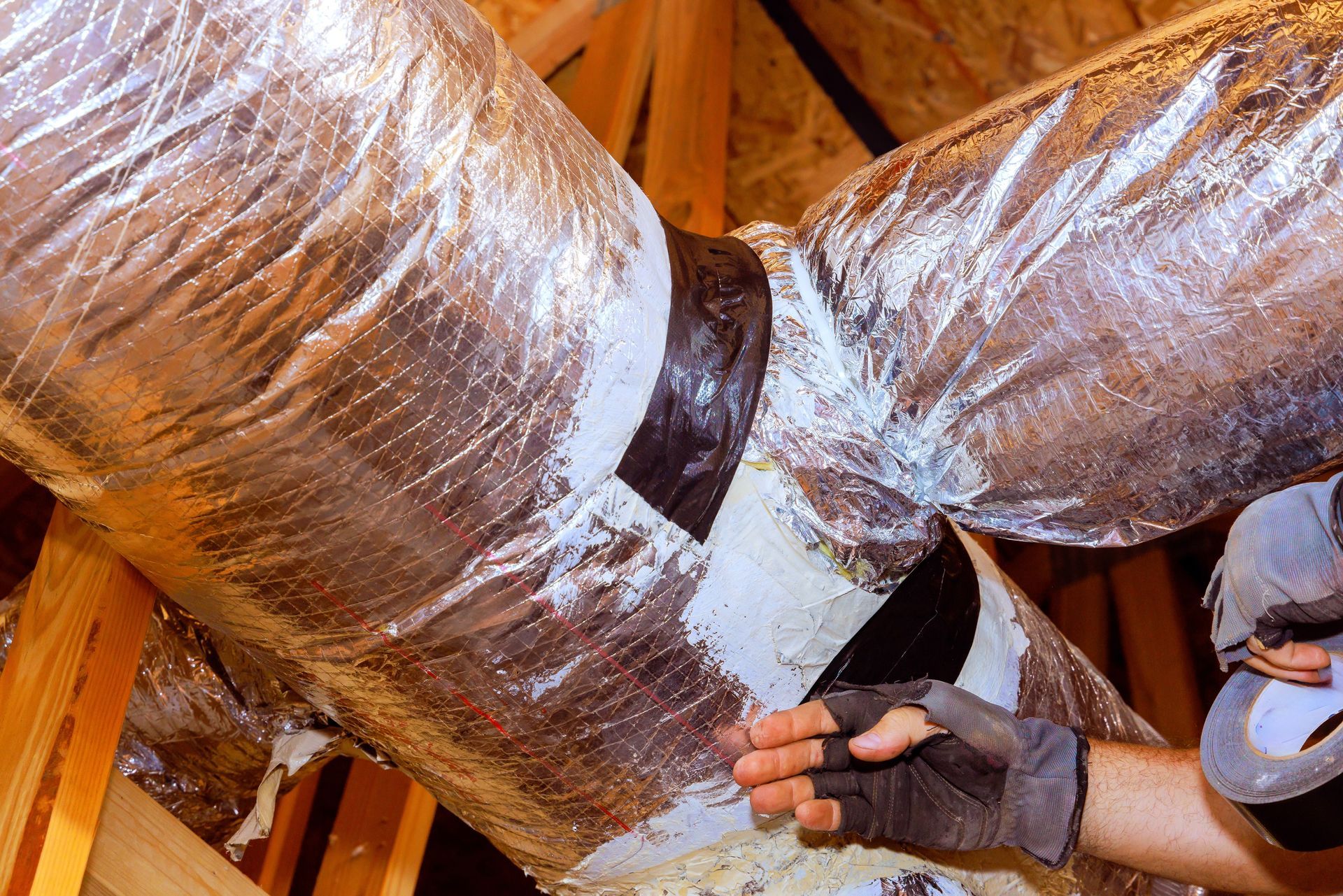
What Proper Ductwork Accomplishes
Duct system upgrades involve replacing sections that leak conditioned air, resizing runs that were originally installed too small for the air volume required, and adding return pathways that allow proper air circulation back to the HVAC equipment. Custom ductwork layouts account for structural obstacles, minimize the number of turns that create resistance, and incorporate dampers for balancing airflow between zones.
After installation, each room receives the calculated airflow needed to match its heating and cooling load, eliminating the temperature variations that occur when some spaces get too much air and others receive too little. Energy bills decrease as sealed ductwork delivers conditioned air to intended spaces rather than leaking it into attics or wall cavities. System noise diminishes because properly sized ducts move air at lower velocities that don't create the whistling or rumbling sounds associated with undersized or turbulent airflow paths.
Duct installation includes insulating runs in unconditioned spaces to prevent heat gain during cooling and heat loss during heating, connecting all sections with sealed joints that prevent air leakage, and testing final airflow at each register to verify balanced distribution. The work transforms how consistently your HVAC system maintains comfort throughout your home.
Common Questions About This Service
Homeowners planning ductwork projects want to understand how design decisions affect long-term comfort and efficiency.
How is duct size determined for each room?
Airflow calculations measure the cubic feet per minute needed based on room size, insulation levels, window area, and sun exposure, then convert that volume to duct diameter or dimensions that deliver the required air without exceeding velocity limits that create noise.
What causes some rooms to stay warmer or cooler than others?
Undersized ductwork restricting airflow to distant rooms, excessive duct length creating friction loss, leaking connections wasting air before it reaches the space, or improper return air pathways preventing circulation all contribute to uneven temperature distribution.
Why does duct installation include both supply and return components?
Supply ducts deliver conditioned air from the HVAC system to rooms, while return ducts pull air back to the equipment for reconditioning, creating the circulation loop necessary for maintaining consistent temperatures and proper system operation.
When should existing ductwork be replaced rather than repaired?
Duct replacement makes sense when flexible duct has compressed to restrict airflow, metal ductwork shows extensive rust or separation, asbestos-containing materials require removal, or the existing layout can't support upgraded HVAC equipment capacity.
How do Florence's attic temperatures affect ductwork performance?
Unconditioned attic spaces reaching 130 degrees in summer or dropping below freezing in winter cause significant temperature loss in uninsulated ductwork, making proper insulation and sealing essential for maintaining air temperature during distribution.
DLM Enterprises evaluates your home's layout and HVAC capacity to design ductwork systems that deliver balanced airflow and support efficient heating and cooling. Contact us to discuss duct installation options that would resolve temperature inconsistencies or accommodate system upgrades in your property.