
Ventilation Systems That Handle Kitchen Exhaust
Commercial Hood Installation in Florence for restaurant kitchens and food service operations where grease-laden air must be captured and exhausted safely
Commercial kitchen hoods capture grease, smoke, and heat at the source before they spread throughout the building or accumulate on surfaces. DLM Enterprises handles commercial hood installation in Florence for new restaurants, kitchen renovations, and facilities upgrading to larger or more efficient exhaust systems. Hood systems are not optional—fire code and health regulations require specific capture velocities and exhaust rates based on cooking equipment type, whether gas or electric, and the volume of grease being produced.
Installation includes mounting the hood enclosure above cooking equipment, running ductwork with the required upward slope to drain grease back toward collection points, connecting exhaust fans rated for grease-laden air, and ensuring makeup air is provided to replace what is being exhausted. Hood ventilation ductwork requires welded seams and grease traps at specific intervals, not the standard duct connectors used in general ventilation systems, because grease buildup in ducts is a primary ignition source in kitchen fires.
Schedule a kitchen assessment to determine hood size, ductwork routing, and exhaust fan capacity based on your cooking equipment layout and menu type.
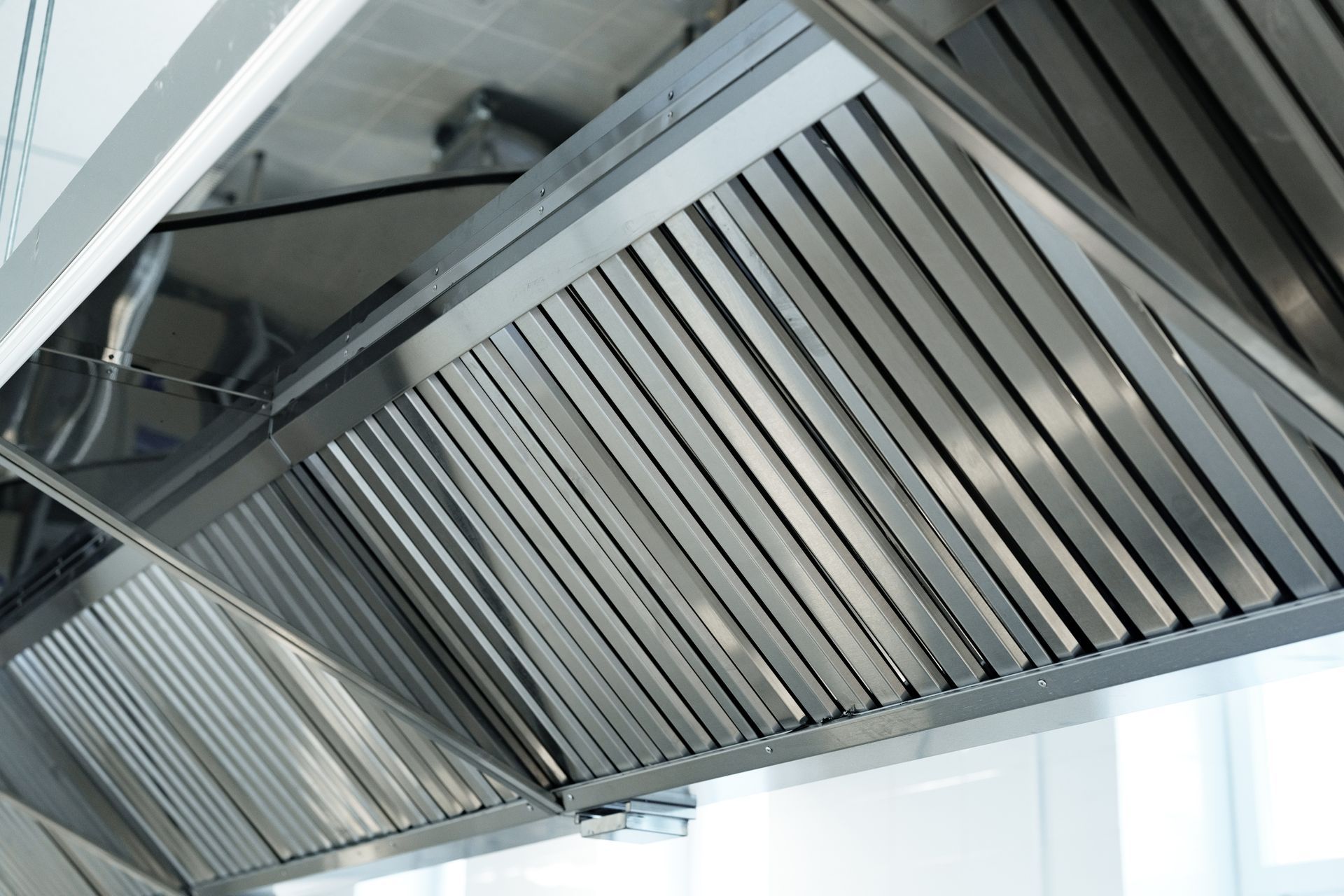
What Changes After Hood Systems Are Installed
Hood sizing depends on the type of cooking equipment underneath—charbroilers and fryers generate more grease and require higher capture velocities than ovens or steamers. Ductwork must slope upward at least two percent grade to prevent grease from pooling in horizontal runs, and access panels are required at every change of direction so the system can be cleaned thoroughly during inspections.
After installation, smoke and steam are pulled into the hood immediately instead of drifting into dining areas, kitchen temperatures drop because heat is being exhausted rather than radiating into the room, and grease no longer settles on walls or equipment surfaces outside the hood capture zone. Exhaust fans operate continuously during cooking hours without overheating, and the system passes fire marshal inspections because ductwork is installed with proper clearances from combustible materials and equipped with accessible cleanout points.
The work includes hood enclosure installation, duct fabrication and mounting, and exhaust fan connection. It does not include fire suppression system installation, makeup air unit setup, or structural reinforcement if roof framing is insufficient to support exhaust fan weight. Hood effectiveness depends on keeping filters clean and ductwork professionally cleaned on the schedule required by your insurer and local fire code.
Common Questions About This Service
Restaurant owners frequently ask about hood requirements and what determines system size and cost.
What determines the size of hood needed for a commercial kitchen?
Hood size is based on cooking equipment type and layout, with the hood extending at least six inches beyond equipment on all open sides to capture rising heat and grease before it escapes into the kitchen.
How often does hood ductwork require professional cleaning?
Most jurisdictions and insurance policies require quarterly or semi-annual cleaning depending on cooking volume and grease production, with inspections documenting that buildup has been removed from all interior duct surfaces.
Why must commercial hood ductwork differ from standard ventilation duct?
Grease-laden air requires welded ductwork seams, continuous upward slope to drain grease, and construction from heavier-gauge steel that resists corrosion and maintains integrity if a duct fire occurs.
What is the relationship between exhaust and makeup air in a kitchen?
Every cubic foot of air exhausted must be replaced by makeup air entering the building, or the kitchen develops negative pressure that restricts exhaust flow, causes doors to slam, and pulls unconditioned air through every gap in the building envelope.
When should an existing hood system be replaced versus upgraded?
Replacement is necessary when duct interiors are corroded beyond cleanability, when hood size no longer covers current equipment, or when exhaust fan capacity is insufficient for the cooking volume and cannot be increased without replacing ductwork to handle higher airflow.
DLM Enterprises installs and upgrades commercial kitchen hood systems for restaurants and food service operations throughout Florence. Request a consultation to review your equipment layout and discuss hood sizing, ductwork routing, and exhaust fan requirements for your specific cooking operation.